


Tofu vs Tapioca Cat Litter: Which Is Better?
Share
What Is Tofu Cat Litter?
Tofu cat litter is made from soybean byproducts — the same material used to make tofu. The soybean fibers are compressed into small pellets or cylinders that absorb moisture and form clumps.
Key characteristics:
- Made from plant-based soybean fiber
- Naturally absorbent — soaks up liquid quickly
- Soft, lightweight pellets that are gentle on paws
- Often available in scented varieties (milk, green tea, etc.)
- Plant-based and biodegradable (dispose according to local waste regulations)
Tofu litter has been popular in Asia for years and is now gaining traction worldwide, especially among cat owners who want a natural, low-dust option.
What Is Tapioca Cat Litter?
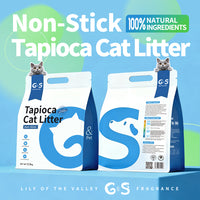
Tapioca cat litter is made from cassava (tapioca) starch, sometimes blended with pea fiber and cornmeal. The cassava root is processed into granules that clump firmly when wet.
Key characteristics:
- Made from cassava starch, pea fiber, and cornmeal
- Forms exceptionally firm, tight clumps
- Naturally non-stick — clumps release cleanly from the box
- Low dust production
- Fast absorption rate (compared to standard clay litter)
- Plant-based and biodegradable (dispose according to local waste regulations)
Tapioca litter is newer to the market but has quickly earned a reputation for solving one of cat owners' biggest complaints: litter sticking to the bottom of the box.
Head-to-Head Comparison
Let's get into the details that actually matter when you're standing in the litter aisle (or scrolling online).
1. Clumping Performance
| Feature | Tofu Cat Litter | Tapioca Cat Litter |
|---|---|---|
| Clump firmness | Moderate — clumps hold together but can break if disturbed | Very firm — clumps lift out in whole pieces |
| Non-stick | Good — some sticking on the bottom may occur | Excellent — clumps release cleanly, no scraping needed |
| Absorption speed | Fast — liquid is absorbed quickly | Very fast — absorbs rapidly compared to standard clay litter |
Edge: Tapioca — If clumping is your top priority, tapioca litter has a clear advantage. Its firm, non-stick clumps make scooping significantly easier. You won't spend time scraping the bottom of the litter box, which is one of the most common complaints with other litters.
Tofu litter still clumps well, but the clumps can be more fragile. If you have a cat that digs aggressively or you don't scoop frequently, you might find tofu clumps breaking apart.
2. Odor Control
| Feature | Tofu Cat Litter | Tapioca Cat Litter |
|---|---|---|
| Natural odor absorption | Good — soybean fiber absorbs odors | Very good — cassava starch has strong odor-binding properties |
| Scented options | Often available in milk, green tea, or floral scents | Available in lily of the valley and other light scents |
| Added deodorizers | Varies by brand | Often enhanced with baking soda for antibacterial protection |
Edge: Tie — Both litters handle odor well, but they approach it differently. Tofu litter often relies on added fragrances (like a pleasant milk aroma) to mask odors. Tapioca litter uses the natural odor-binding properties of cassava starch, often enhanced with baking soda for longer-lasting freshness.
If you prefer a lightly scented litter, tofu might appeal to you. If you want odor control without strong fragrances, tapioca is an excellent choice.
3. Dust Levels
| Feature | Tofu Cat Litter | Tapioca Cat Litter |
|---|---|---|
| Dust when pouring | Low — pellets produce minimal dust | Very low — granules are processed with multi-step dust removal |
| Dust when scooping | Low | Very low — stays intact even after repeated scooping |
| Suitability for sensitive cats | Good | Very good — suitable for cats with asthma or respiratory issues |
Edge: Tapioca — Both are significantly better than clay litter when it comes to dust, but tapioca has a slight edge. Its multi-step dust removal process results in virtually no dust cloud when you pour or scoop. This makes it especially suitable for cats with asthma, allergies, or other respiratory sensitivities.
4. Tracking and Mess
| Feature | Tofu Cat Litter | Tapioca Cat Litter |
|---|---|---|
| Tracking level | Moderate — larger pellets can be carried out | Low — granules are dense and less likely to stick to paws |
| Paw feel | Soft and gentle | Smooth and non-irritating |
| Cleanup around box | Some scatter expected | Minimal scatter |
Edge: Tapioca (slightly) — Tofu pellets are larger and softer, which some cats love, but they can be carried out of the box on paws. Tapioca granules are denser and smoother, so they're less likely to track. However, both are far better than clay when it comes to keeping your floors clean.
5. Automatic Litter Box Compatibility
| Feature | Tofu Cat Litter | Tapioca Cat Litter |
|---|---|---|
| Clump durability | Moderate — clumps may break during sifting | Very good — firm clumps resist breaking |
| Jamming risk | Low | Very low — granules flow smoothly through sieves |
| Waste efficiency | Good | Very good — high utilization means less waste |
Edge: Tapioca — If you use an automatic or self-cleaning litter box, tapioca litter is generally the better choice. Its firm clumps don't break apart as easily during the sifting cycle, and the granules flow smoothly through the mechanism without jamming. This means fewer malfunctions and less wasted litter.
Honest Drawbacks You Should Know
No litter is perfect. Here are the real downsides of each:
Tofu cat litter drawbacks:
- Clumps can be fragile and break apart during scooping
- Larger pellets may track more than finer granules
- Some cats may try to eat the pellets (supervise during transition)
- May require more frequent full-box changes compared to tapioca
Tapioca cat litter drawbacks:
- Granules are smaller, which some cats may initially resist if they're used to larger pellets
- Generally priced slightly higher than basic tofu litter options
- Less widely available in retail stores compared to tofu litter
- The non-stick performance can vary depending on how much litter is in the box (maintain recommended depth)
The Third Option: Why Not Both?
Here's something most articles won't tell you — you don't have to choose just one.
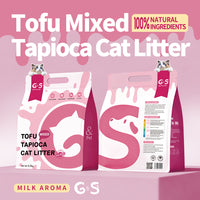
Mixed tofu-tapioca cat litter combines the strengths of both materials in a scientifically optimized ratio. A 60:40 tofu-to-tapioca blend delivers:
- Fast absorption from the tofu component
- Firm, non-stick clumping from the tapioca component
- Reduced tracking — smaller tapioca granules settle to the bottom while larger tofu pellets stay on top, creating a natural barrier against tracking
- Built-in pH detection from the tofu component
- Balanced odor control combining both materials' natural properties
Think of it as getting the best of both worlds without the compromises. The tofu handles quick absorption and health monitoring, while the tapioca ensures the clumps are solid and the box stays clean.
Which Litter Should You Choose?
Choose Tofu Cat Litter if you:
- Want a softer pellet texture that some cats prefer
- Like lightly scented options (milk aroma, green tea)
- Prioritize fast initial absorption
- Want built-in pH detection without adding separate particles
- Have a cat that prefers larger pellets
Choose Tapioca Cat Litter if you:
- Are tired of scraping stuck litter off the bottom of the box
- Want the firmest, most scoop-friendly clumps possible
- Have a cat with asthma or respiratory sensitivities
- Use an automatic litter box
- Want minimal tracking and dust
- Prioritize low-maintenance cleanup
Choose Mixed Tofu-Tapioca Cat Litter if you:
- Want the benefits of both without compromise
- Have multiple cats with different preferences
- Want reduced tracking with firm clumping
- Value the pH detection feature alongside non-stick performance
- Want the most versatile option for any household setup
Making the Switch
If you're switching from clay litter to either tofu or tapioca, here are a few tips to make the transition smooth:
- Gradual transition — Mix the new litter with your old litter, starting with 25% new and 75% old. Gradually increase the ratio over 7-10 days.
- Keep it clean — Both plant-based litters perform best when scooped daily. A clean box encourages your cat to use it consistently.
- Monitor your cat — Watch for any changes in bathroom habits during the switch. Most cats adapt quickly to both tofu and tapioca litter.
- Proper disposal — Both litters are plant-based and biodegradable. Dispose of used litter according to your local waste regulations. Do not flush down the toilet.
The Bottom Line
There's no single "best" cat litter — only the best litter for your situation. Tofu and tapioca are both excellent plant-based options that outperform traditional clay in dust, tracking, and environmental impact.
If we had to summarize:
- Tapioca excels at clumping, non-stick performance, dust control, and automatic box compatibility
- Tofu excels at soft texture, scented options, and built-in pH detection
- The mixed blend offers the most balanced performance across all categories
Whichever you choose, you're making a better choice for your cat's health, your home's air quality, and the environment. And isn't that what matters most?
Looking to explore your options? Check out our tapioca cat litter, tofu cat litter, or the mixed tofu-tapioca blend to find the right fit for your cat.