


Tapioca vs. Clay Cat Litter: Which Is Better for Your Cat?
Share
Choosing a cat litter can feel surprisingly complicated. Walk into any pet store and you'll see bags of clay, wood, corn, paper, tofu, and tapioca — each promising to be the best. But when you get down to it, the two most common choices are traditional clay litter and plant-based options like tapioca.
If you've been wondering which one is better for your cat (and for your home), this guide breaks down the real differences — clumping, dust, odor control, tracking, and environmental impact — so you can make an informed choice.
What Is Clay Cat Litter?
Clay litter is the classic choice. Most formulations use sodium bentonite, a type of clay that swells and clumps when it gets wet. It's been the industry standard for decades because it works and it's cheap.
The pros of clay litter:
- Forms solid clumps quickly
- Widely available and inexpensive
- Familiar texture most cats accept easily
The cons of clay litter:
- Dust. Clay is ground into tiny particles, and even "low-dust" bags release airborne dust when you pour and scoop. That can be tough on cats with respiratory sensitivities — and on owners with allergies or asthma.
- Heavy. Clay litter is dense, which means heavier bags to haul and more frequent trips to the store.
- Not biodegradable. Mined clay doesn't break down naturally and typically ends up in landfill.
- Tracking. Fine clay granules stick to paws and travel through the house.
What Is Tapioca Cat Litter?
Tapioca cat litter is made from cassava root — the same plant that gives us tapioca starch. The root is processed into smooth, dense granules that absorb moisture and clump.
The pros of tapioca litter:
- Hard, clean clumping. Tapioca granules bind tightly on contact with liquid, lifting cleanly off the box bottom and the scoop. No sticky residue, no scraping.
- Very low dust. The smooth granules produce far less airborne dust than clay — a meaningful difference for sensitive cats and owners.
- Low tracking. The grains are larger and smoother than clay, so less ends up scattered across your floor.
- Plant-based and biodegradable. Made from renewable plant material.
- Lightweight. Easier to carry, pour, and change.
- Works in automatic litter boxes alongside traditional ones.
The cons of tapioca litter:
- Slightly higher cost per bag than basic clay
- May be less familiar to some cats, so a gradual transition usually helps
Side-by-Side: Tapioca vs. Clay
| Feature | Clay Litter | Tapioca Litter |
|---|---|---|
| Clumping | Good | Hard, clean lift-off |
| Dust level | Moderate–high | 99.9% dust-free |
| Odor control | Good | Good |
| Tracking | High | Low |
| Weight | Heavy | Lightweight |
| Plant-based | No | Yes |
| Biodegradable | No | Yes |
| Automatic box friendly | Yes | Yes |
Which Should You Choose?
Choose clay litter if: you want the lowest upfront cost and your cat has never had issues with dust, tracking, or heavy bags. Clay works — it has for decades.
Choose tapioca litter if: your cat (or any human in your home) is sensitive to dust, if you're tired of litter tracking all over the floor, if you find clay bags heavy and dusty, or if you prefer a plant-based, biodegradable option that's gentler on the environment.
For many owners, tapioca is the clear upgrade: hard clumps, nearly no dust, low tracking, and a cleaner home overall. And because it's plant-based, it breaks down naturally — just be sure to follow your local waste-sorting guidelines when you dispose of used litter.
How to Switch Your Cat from Clay to Tapioca
Cats are creatures of habit, so switch gradually:
- Start with 25% tapioca mixed with 75% of the old litter.
- After 3–4 days, move to a 50/50 mix.
- After another few days, go to 75% tapioca.
- Finally, go 100% tapioca.
Most cats adjust within about a week. If yours is picky, keep a second box with the old litter nearby so they always have a familiar option.
Frequently Asked Questions
Is tapioca cat litter dust-free? G&S tapioca litter is rigorously dust-controlled to near-zero airborne dust, making it a comfortable choice for cats and owners with respiratory sensitivities.
Does tapioca litter clump well? Yes. The granules form hard, firm clumps that hold together and lift cleanly off the box — no scraping and no sticky residue.
Is tapioca litter safe for kittens? Yes. It's made from food-grade tapioca and natural plant fibers with no harsh chemicals or artificial fragrances. Still, always introduce any new litter gradually.
Can automatic litter boxes use tapioca litter? Yes. It clumps hard and holds its shape, so it works well in both standard and automatic litter boxes.
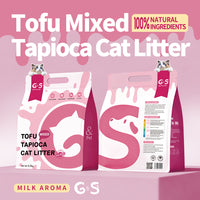
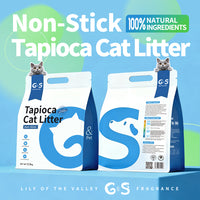
Ready to make the switch? Try our G&S Tapioca Cat Litter — hard clumping, 99.9% dust-free, and gentle on sensitive cats. Or explore our plant-based Tofu Cat Litter for another great natural option.