


How Often Should You Change Cat Litter? A Complete Guide
Share
If you've ever walked past the litter box and thought, "Is it time to change it?" — you're not alone. Most cat owners aren't sure how often they should be replacing their cat's litter, and the answer isn't one-size-fits-all. It depends on the type of litter you use, how many cats you have, and your scooping habits.
In this guide, we'll break down exactly how often you should scoop, refresh, and fully replace your cat's litter — so your home stays fresh and your cat stays happy.
Daily: Scoop Waste
This one is non-negotiable. Scooping solid waste and urine clumps once a day (ideally twice) is the foundation of a clean litter box. Cats have a strong sense of smell — far stronger than ours — and a dirty box can cause them to avoid it entirely, leading to accidents around the house.
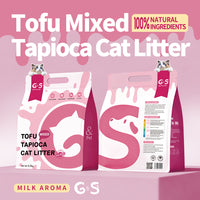
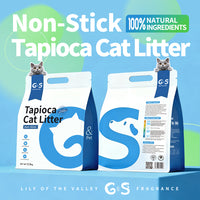
If you use a hard-clumping litter like G&S Pet tapioca or tofu litter, scooping is quick and easy. The clumps lift out in whole pieces without sticking to the bottom, so you're not scraping and scrubbing every day.
Tip: Keep a litter scoop next to the box and make it part of your daily routine — morning and evening is ideal.
Every 1–2 Weeks: Partial Refresh
Even with daily scooping, small particles and residual odor build up over time. Every 1 to 2 weeks, add fresh litter to replace what you've scooped out. This keeps the litter depth consistent (cats prefer 2–3 inches) and helps control odor between full changes.
If you notice the litter starting to smell before the two-week mark, it's a sign you may need to increase the amount of litter in the box or add a partial refresh sooner.
Every 2–4 Weeks: Full Box Change
A full replacement means dumping all the litter, washing the box, and filling it with fresh litter. How often you need to do this depends on several factors:
- Single cat, clumping litter: Every 3–4 weeks
- Single cat, non-clumping litter: Every 1–2 weeks
- Multiple cats: Every 2–3 weeks (or more often with more cats)
- Automatic litter box: Every 3–4 weeks, depending on capacity
How to do a full change:
- Empty the entire box into a bag and seal it
- Wash the box with mild soap and warm water (avoid harsh chemicals — cats hate the smell)
- Dry the box completely
- Fill with 2–3 inches of fresh litter
Factors That Affect How Often You Change Litter
Number of Cats
More cats = more waste. If you have two or three cats sharing a box, you'll need to scoop more often and do full changes more frequently. The general rule is one litter box per cat, plus one extra.
Type of Litter
- Clumping litter (like tapioca or tofu) lasts longer because you can remove waste completely
- Non-clumping litter absorbs urine but doesn't let you remove it, so it needs replacing more often
- Crystal/silica litter can go longer between changes but doesn't clump at all
Diet
Cats on a high-moisture diet (wet food) produce more urine, which means the litter box fills up faster. If your cat eats mostly wet food, you may need to change litter more often.
Litter Box Size and Depth
A larger box with more litter can go longer between changes. Cats prefer at least 2–3 inches of litter depth — anything less and they may not cover their waste properly, leading to faster odor buildup.
Signs It's Time to Change the Litter
Even if you're following a schedule, watch for these signs:
- Persistent odor that doesn't go away after scooping
- Your cat avoiding the box or going outside it
- Visible soiling on the box walls or bottom
- Clumps that break apart instead of lifting clean (a sign the litter is saturated)
- Your cat scratching outside the box — this often means they're unhappy with the box conditions
A Simple Schedule to Follow
| Task | Frequency |
|---|---|
| Scoop waste | Daily (1–2 times) |
| Add fresh litter | Every 1–2 weeks |
| Full box change | Every 2–4 weeks |
| Wash the box | With every full change |
| Replace the box itself | Every 6–12 months |
Why Litter Choice Matters
The type of litter you use has a big impact on how often you need to change it. Hard-clumping, low-dust litters like G&S Pet tapioca and tofu cat litter make daily scooping faster and extend the time between full changes. Because the clumps lift out cleanly without sticking, less waste stays behind — which means less odor and fewer full replacements.
All G&S Pet litters are 99.9% dust-free, plant-based, and biodegradable. Please dispose of used litter according to your local waste-sorting guidelines — do not flush it.
The Bottom Line
A clean litter box isn't just about odor control — it's about your cat's health and happiness. Cats are clean animals by nature, and a dirty box can lead to stress, urinary issues, and behavioral problems. By scooping daily, refreshing every 1–2 weeks, and doing a full change every 2–4 weeks, you'll keep your cat comfortable and your home smelling fresh.
---
**Looking to make scooping faster and stretch time between full box changes?** [G&S Pet Non-Stick Tapioca Cat Litter](https://gspet.shop/products/tapioca-cat-litter) clumps hard and lifts out in whole pieces — so less waste stays behind and you go longer between refreshes. Prefer fast absorption? The [Tofu-Tapioca Mixed Cat Litter](https://gspet.shop/products/tofu-tapioca-mix-cat-litter) pairs quick-drying tofu with firm tapioca clumps for low-maintenance upkeep.